Your SDR Team Dials 340 Numbers a Day and Books Four Meetings a Week
Your VP Sales opens the dial report Monday, 340 dials a day across four SDRs, 1,700 for the week, four booked meetings. A queue nobody staffed.

It is Monday, 9:48 AM. Your VP Sales opens the Outreach dashboard with the second coffee. Four SDRs dialed 1,712 numbers last week. The connect rate reads 4.8 percent. The conversation-to-meeting rate reads 11 percent. Four meetings landed on the AE calendars. Two showed up. One disqualified in the first ten minutes against a persona the SDR already flagged in the notes.
He opens Gong and searches the trailing 30 days for the word "wrong person." Thirty-four calls come back. Eighteen reference the title moved out of the ICP three quarters ago. Nine reference a company that got acquired in April and never shipped back into the data provider's feed. Four reference a direct number that routed to the IT helpdesk because the Zoominfo export merged two Jennifer Chens from different companies into one row.
The founders in this seat keep opening a fifth SDR req at $72K base plus 40 percent variable and wondering why pipeline-sourced-by-SDR drifted from $1.4M to $620K in two quarters. Outbound is not a headcount problem. Outbound is a six-stage queue that starts with an account landing in the ICP tier and ends with a qualified meeting the AE keeps on the calendar. Five tools touch the queue and no human owns the stage between them.
The 1,712-dial week that books four meetings
Sort last week's activity by SDR. Four reps logged a combined 1,712 dials, 340 emails, and 94 LinkedIn touches against 420 accounts. Seventy-two connects came back on the dials. Eight turned into a conversation past the 60-second mark. Four booked a meeting. The dial-to-meeting conversion reads 0.23 percent, against a healthy outbound team that runs 1.2 to 1.8.
The gap sits in three stages the team never resourced. Stage one is account research, where the SDR opens a tab in LinkedIn Sales Navigator on Monday, scrolls the company page, opens three recent posts from the CRO, and drops a one-line note into the Outreach sequence before the 10 AM blitz. Stage two is contact selection, where the SDR pulls the top three titles from the data provider, skips the verification call to the gatekeeper, and loads 85 contacts into the sequence against a filter that last ran in March. Stage three is objection-handling, where the SDR opens the connect, delivers the opening line from the battle card, hears a three-word objection back, and ships the hang-up inside 18 seconds against a script the enablement team retired in June.
The AE who inherits the four meetings opens Salesforce, reads the activity history, and rebuilds the account context from the LinkedIn feed before the call starts. Two meetings fall out before the first discovery question because the AE never saw the acquisition note from the news feed the SDR skipped on Monday.
Stage one: the account research nobody built
Open the top 40 target accounts the SDRs worked last week. Twelve closed a funding round in the trailing six months the sequence never referenced. Nine hired a new executive in the ICP title the SDR never noticed on LinkedIn. Six shipped a competitor logo on the website against a stack signal the team never ran. Four acquired a smaller company and the headcount moved out of the ICP band the data provider last refreshed.
The Series B version of this function reads the account against seven signals every Monday before the blitz opens. Funding rounds from the last 120 days. Executive hires at VP and above with less than 90 days tenure. Headcount delta of 15 percent across trailing two quarters. Competitor logos surfaced on the site from the trailing 60 days. Job postings with the ICP keyword in the last 30 days. Earnings call transcripts for public buyers naming the pain the product solves. Press releases naming the investor in the last round.
Writes a two-sentence account note against the signal that fired, the ICP contact the signal maps to, and the opening line the SDR delivers on the connect. Drops the note into the Outreach task and the Salesforce account record inside ten minutes of the signal firing, not Monday morning when the SDR opens the tab for the first time. Same four reps, same 420 accounts, and the SDR opens the blitz with a line the buyer never heard from a competitor last quarter.
Stage two: the contact selector that trusts the stale export
Pull the last 340 contacts the SDRs loaded into sequence. Forty-two bounced inside 48 hours. Twenty-eight route to a number the receptionist filters against a dialer list she updated in September. Fourteen carry a title the buyer deprecated when the org restructured in July. Nine moved companies and the sequence shipped to the old address three weeks after the LinkedIn update went live.
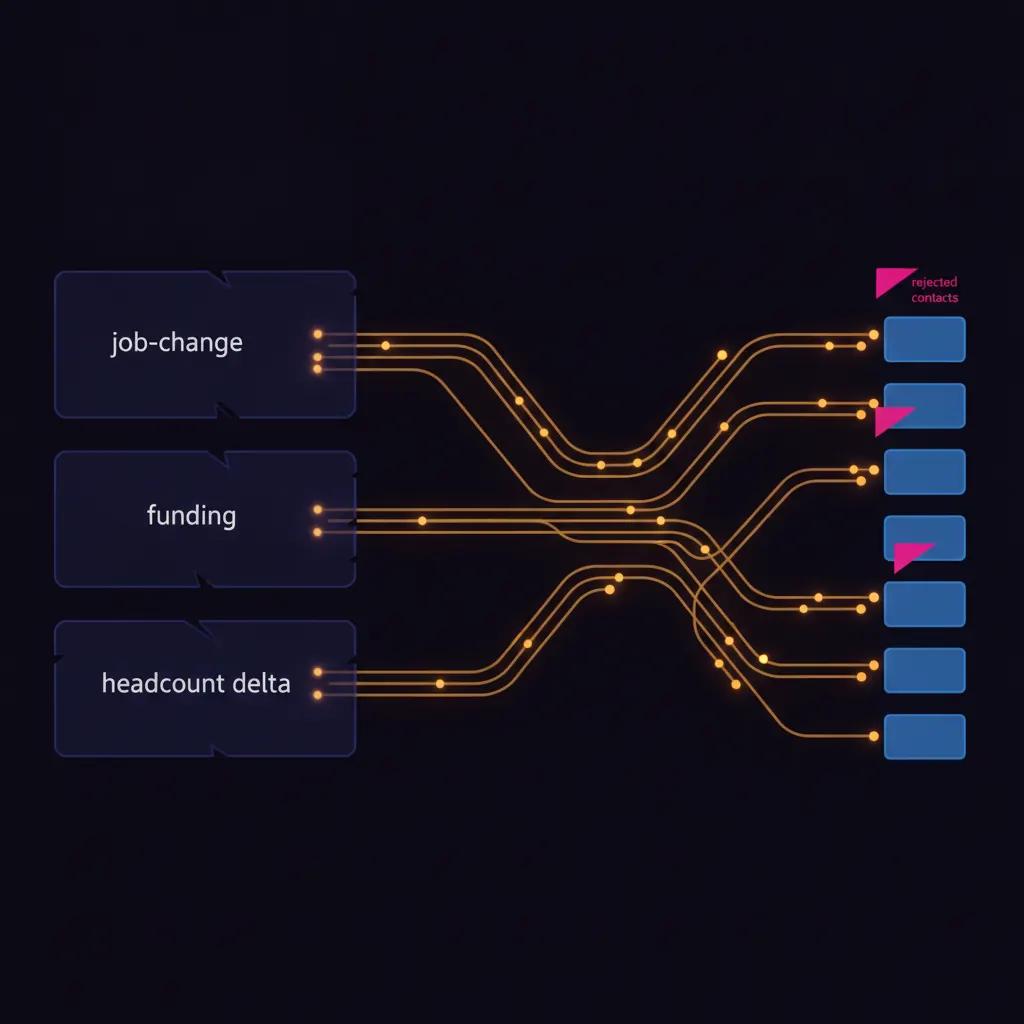
The stuck version runs an Apollo filter against last quarter's ICP, exports to CSV, drops into Outreach, and opens the first sequence step on Tuesday. The Series B version verifies every contact against three sources on the day the account enters the queue. Checks the LinkedIn profile for an updated title inside the last 60 days. Cross-references the direct number against the carrier record and the last two cleared outbound calls in Gong. Drops the contact into a 72-hour quarantine before the sequence opens if the data provider's last refresh reads stale against the LinkedIn update.
Flags the contact to the SDR with the title mismatch, the suspected new employer, and the five-second verification path before the dial goes out. Bounce rate drops from 12 percent to under 2. The 1,712 dials that landed on wrong persons last week collapse by 340, and the SDR spends the recovered 90 minutes a day on the opening line the account research surfaced.
Stage three: the objection router that retires the script on Monday
Pull the trailing 90 days of Gong calls under 90 seconds. Four hundred twelve calls come back. The three objections that kill 68 percent of the opens read "we already run a vendor there," "send me an email," and "not the right person." The SDR hears the objection, ships the two-sentence rebuttal from the battle card the enablement team last touched in April, hears a hang-up tone inside eight seconds, and dials the next number on the list.
The stage-three function reads every call in Gong within an hour of the hang-up. Tags the objection against the top 12 patterns, the account signal that routed the SDR into the dial, and the rebuttal the SDR delivered. Routes the "already run a vendor" objection to a sequence branch that references the switching cost the win-loss case studies surfaced in the trailing two quarters. Routes the "send me an email" objection to a 48-hour follow-up with the exact one-pager the buyer asked for, not the generic deck the SDR ships against every email handle.
Retires any rebuttal that produces a hang-up rate above 40 percent across 20 calls. Promotes any rebuttal that produces a meeting-booked rate above 6 percent across 30 calls. The battle card updates Wednesday morning against last week's call data, not next quarter against the QBR notes. The connect-to-meeting rate moves from 11 percent to 28 inside two cycles.
The unit economics of a fifth SDR against an agent stack
Run the two paths against the fifth SDR req sitting in the drafts folder at $72K base plus 40 percent variable. Path A closes the req in December, ramps the hire through Q1, and adds a fifth outbound body dialing against the same stale queue. Loaded year-one cost lands $108K to $132K. Dials per week move from 1,712 to 2,140. Booked meetings move from four to five. Show rate stays at 50 percent against a disqualification rate the AE books at the front end.
Path B ships a three-sprint fractional AI sales function at $72K to $108K in build across the first 60 days and $5K to $7K a month to run. Sprint one lands the account research signal stack against the seven sources. Sprint two lands the contact verifier against LinkedIn, the data provider, and Gong's cleared-call history. Sprint three lands the objection router against Gong with the battle-card refresh cadence on Wednesday mornings.
The fractional AI department runs the outbound queue on the cadence the pipeline forecast runs, not the cadence a Monday blitz can chase. Loaded year one lands $132K to $192K plus a fractional Sales Development operator at $6K a month who owns the persona judgment and the escalation calls. Booked meetings move from four a week to 14, show rate climbs to 72 percent, and the AE opens every call with an account note the buyer never heard pitched last quarter. The 14-day sprint that stands up the research signal stack costs less than the recruiter retainer for the fifth SDR.
The four numbers a VP Sales runs before the next SDR req
The founders reading this are three weeks from posting a fifth SDR req on the strength of a dials-per-day narrative. Before the offer letter goes out, run four numbers against the outbound function, not the headcount. Score the queue, not the hire.
Dial-to-meeting conversion. Divide the booked meetings in the trailing 30 days by the dials logged in the same window. A healthy outbound team runs 1.2 to 1.8 percent with signal-routed opens and a weekly battle-card refresh. A stuck team runs 0.2 to 0.4, and the fifth SDR adds dial volume against the same conversion rate.
Bounce rate on sequenced contacts. Divide the 48-hour bounces by the contacts loaded into sequence. A healthy function runs under 3 percent with a verification layer against LinkedIn and Gong. A stuck function runs 10 to 15, and the data provider's export carries the stale filter that routed the SDR into the wrong persona nine months ago.
Under-90-second call rate. Divide the Gong calls under 90 seconds by connected calls. A healthy function runs under 45 percent with an objection router that retires the losing rebuttal inside a week. A stuck function runs 65 to 75, and the enablement team last updated the battle card two quarters before the competitor shipped the pricing change.
AE-marked disqualification rate on SDR meetings. Divide the meetings the AE marks disqualified inside the first discovery call by total SDR-booked meetings. A healthy function runs under 12 percent with an ICP guard the research stack enforces at account entry. A stuck function runs 35 to 50, and the AE rebuilds the account context from LinkedIn before the first question lands. Any two numbers in the stuck zone means the queue is the problem, and you can scope the outbound function in a 30-minute call this week.
 2026-11-01
Your Salesforce Is Not Pipeline Management
Salesforce stores 240 opportunities. Pipeline management is the function that lands 11 AEs on the three deals that close the quarter against the commit on cadence.
 2026-10-30
Your Gong Is Not Sales Coaching
Gong stores 1,840 calls. Sales coaching is the function that lands 11 AEs on the three skill reps that close the quarter with the plan on the ledger.
 2026-10-24
What a Fractional AI SDR Agent Does
A fractional AI SDR agent researches the 1200 target accounts, drafts the sequence replies, and ships the Monday pipeline brief with meetings booked cited.