Your Deal Desk Sits on 34 Custom Quotes and Eight Slip the Quarter
Your VP Sales opens the deal desk queue Tuesday, 34 custom quotes open, oldest sat 18 days, eight slipping the quarter. Deal desk is a queue nobody staffed.
It is Tuesday, September 2nd, 9:41 AM. Your VP Sales opens the Deal Desk queue in Salesforce on his second coffee. The board reads 34 open custom quotes. Eight of them have close dates inside the current quarter. The oldest ticket sat 18 days without a movement.
Four quotes wait on a discount signoff from the CFO. Six wait on a Legal redline. Three wait on a product-usage question that the CS lead answered in Slack two weeks ago and nobody pasted into the ticket. The forecast call is Thursday and the number on slide 3 hangs on six of those eight closing.
He opens the sales channel and writes "deal desk cleanup pass today, will flag anything at risk on the forecast call." The Thursday call ships a forecast with six deals in "commit" that his gut says are three. The CRO opens the deck, scrolls to slide 6, and asks whether the Deal Desk hire he signed off on in June has started.
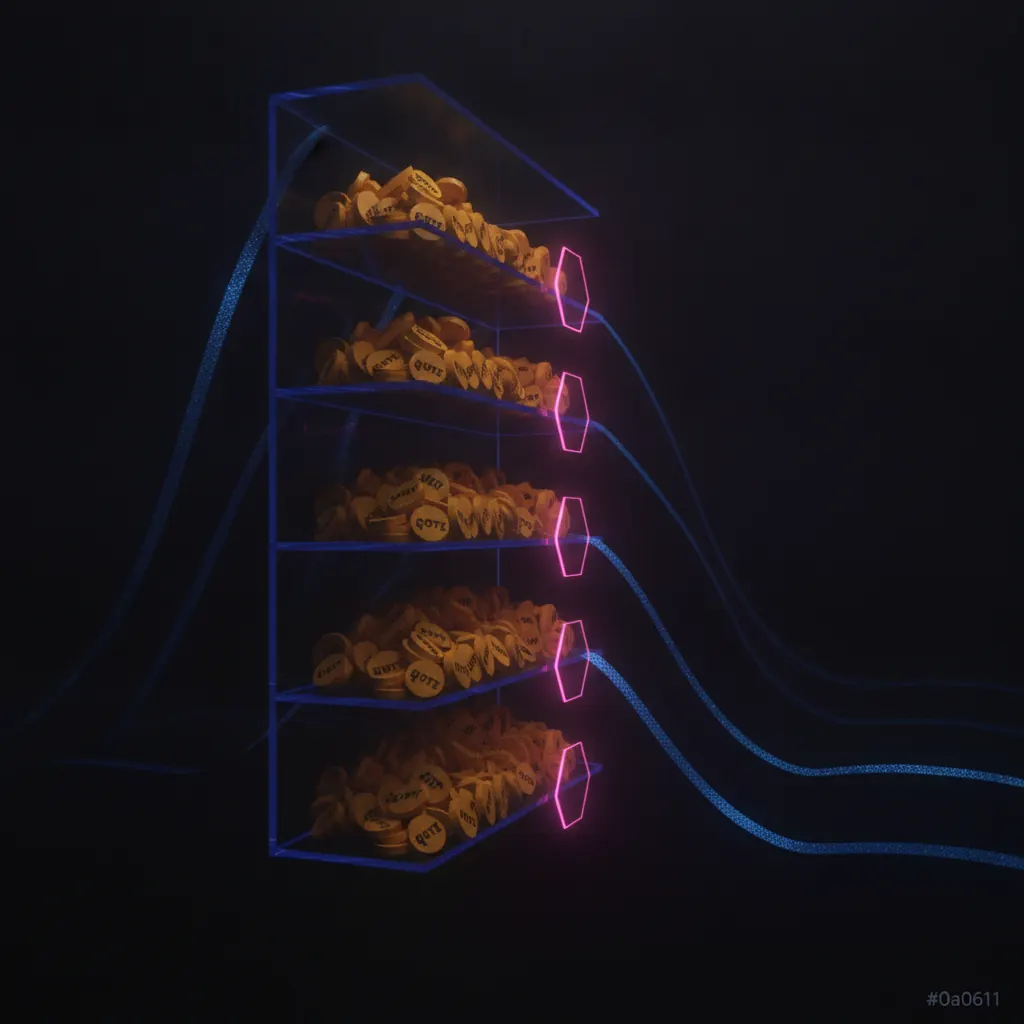
The founders in this seat keep opening a Deal Desk Lead req at $214K base plus equity and wondering why the same 34 quotes keep aging into the same eight slips. Deal Desk is not a headcount. Deal Desk is a five-stage queue that starts with an AE typing a non-standard ask into Slack and ends with a countersigned order form in the buyer's inbox, and nobody on the org chart owns it end to end. The queue has a shape, and an agent stack owns it.
The 34 open quotes, by the numbers
Sort the Deal Desk board. 14 quotes wait on a discount over 22 percent that the CFO must approve by policy. 8 wait on a Legal redline against the standard MSA. 6 wait on a custom SLA that the CTO must sign off on. 3 wait on a payment-terms exception (Net 60 versus Net 30). 3 wait on a co-term calculation against an existing contract. Strip the labels and every ticket sits at the same gate: someone owes an answer, and no one owns the chase.
Of the eight quotes with a close date this quarter, three carry ACVs over $200K, four sit between $80K and $180K, and one is the $410K enterprise deal the CRO named on the last board call. The $410K deal has been open 22 days. The buyer's procurement lead has emailed the AE twice asking for a "cleaner" order form. The AE forwarded both emails to the Deal Desk Slack channel. Nobody replied.
The AE who owns the deal does not own the pricing rubric. The RevOps analyst who owns the CPQ configuration does not own the discount escalation ladder. The CFO who owns discount signoff does not own the redline turnaround. The GC who owns the redline does not own the co-term math. Five owners across four teams, one queue, zero handoffs on cadence. The forecast ships whatever number is left after the finger-pointing, and the 22-day MSA queue at Legal eats the last week of every quarter.
Stage one: the pricing rubric that lives in three people's heads
The Series B version of this function ships a written pricing rubric that answers three questions in under 90 seconds. What is the floor discount by tier and by product? What does the discount ladder look like from 10 to 34 percent, and who signs at each rung? What non-price terms are pre-approved (payment terms, SLA tiers, data-residency addenda) and which trigger a Legal review? The rubric lives in a Notion page the AE opens on the first non-standard ask, and 60 percent of custom quotes never reach the Deal Desk queue because the AE self-serves the answer inside the guardrails.
The version most Series B teams run: the rubric lives in the head of the VP Sales, the CFO, and the founding AE. The other 14 AEs ping the #deal-desk Slack channel every time a buyer asks for a 14 percent discount, a Net 45 payment term, or a redline against the auto-renewal clause. The channel gets 84 messages a week. The VP Sales answers 41 of them by Friday. The other 43 sit until the buyer follows up and the AE re-pings. Six deals a quarter slip because the answer landed on day 9 instead of day 1.
The stage-one function reads every non-standard ask in #deal-desk, matches against the pricing rubric and the last 214 approved exceptions in Salesforce, drafts the answer with the citation to the policy line and the two most recent comparable deals, and posts the draft back into the channel within 90 seconds for the AE and the VP Sales to approve. Eighty-four Slack messages a week collapse to 41 pre-drafted answers waiting for a thumbs-up. The AE gets an answer inside the buyer call instead of on the follow-up email three days later.
Stage two: the discount approval chain
The 14 quotes waiting on a CFO signoff sit in an inbox with 340 other unread emails. The CFO opens the discount folder Wednesday afternoon between two board prep sessions and reviews four of the 14. Two get approved. One bounces back for missing context on the customer's usage tier. One gets a note asking why the AE offered 24 percent when the account tier caps at 18. The other 10 wait until next Wednesday. Two deals slip a week each.
The Series B version routes every discount request through a pre-built context card the moment the AE clicks "request approval" in CPQ. The card shows the account's ARR, the two most recent renewals, the product-usage trend, the competitive context from the last Gong call, and the three most similar approved discounts in the last 90 days with the CFO's rationale on each. The CFO opens the queue Wednesday morning, sees eight cards with the analysis pre-loaded, and approves or rejects each in 90 seconds. Fourteen quotes clear in 22 minutes instead of two weeks.

The stage-two function reads every discount request landing in CPQ, builds the context card from Salesforce, Gong, and the product usage tables, joins against the last 90 days of approved and rejected discounts to flag policy drift, drops the card into the CFO's Slack DM with an approve/reject button, and updates the CPQ record on the click. The four quotes waiting on the CFO Wednesday morning clear before the 10 AM standup. The AE ships the order form to the buyer before lunch on the same day the buyer asked.
Stage three: the redline round trip
The eight quotes waiting on a Legal redline sit in a shared inbox that the fractional GC opens Tuesday and Thursday. The GC works through three redlines a session. The other five wait to next Tuesday. Every redline that touches the indemnity cap or the data-processing addendum triggers a second round. Two rounds of 4 to 6 business days each turns a 9-day close into a 22-day close, and the buyer's procurement lead sends the "we need to push this to Q4" email on day 18.
The stage-three function reads the buyer's redline against the standard MSA, classifies every change against the 41 clauses in the playbook the GC wrote in March, auto-accepts the 22 pre-approved variants, flags the 6 clauses that need GC review with the specific playbook rule and the two most recent redlines that landed at the same clause, drafts the counter-language in the GC's voice, and drops the annotated document into the GC's queue with the accept-all-clean rows already grouped. The GC works one 30-minute session per day and closes 8 redlines a week instead of 6 a fortnight. The redline sit time drops from 22 days to 5 to 8 days across the whole book.
The order-form assembly on the back end is the same shape. The agent reads the approved discount, the approved redline, the CPQ line items, the payment terms, and the SLA tier, assembles the countersign-ready order form against the current template, joins the co-term math against the existing contract in Salesforce, and drops the final PDF into the AE's DocuSign queue with the buyer's procurement lead as first signer. The AE hits send. The 22-day cycle time closes to 9 to 12 days across the whole quote book.
The math against the next Deal Desk Lead hire
Run two paths against the $214K base req plus equity plus benefits for the Deal Desk Lead you posted in July. Path A closes the req in November, ramps the hire through Q1, and starts clearing the same 34 quotes on the same rubric in April. The loaded cost lands at $310K to $380K in year one against a queue that produced eight slips this quarter and six the last. The forecast on the November call still ships six deals in commit that the CRO's gut says are three.
Path B ships a two-sprint fractional AI Deal Desk function at $84K to $132K in build across the first 60 days and $6K to $10K a month to run. The pricing-rubric answer function goes live inside 14 days. The discount-approval-chain function goes live at the start of sprint two. The redline-and-order-form function ships in sprint three on the same standard MSA the GC already wrote the playbook for. Same 34 quotes, same 8 in-quarter close dates, cycled through the three functions, close 14 to 22 quotes on the quarter instead of clearing 6.
The observed conversion range on this pattern across the Series B sales-ops book: 6 to 8 slipped in-quarter quotes on the current path becomes 1 to 3 slipped quotes on the same forecast, and the loaded Deal Desk spend line reads $84K to $132K in year one against the same quote volume instead of $310K to $380K. Same forecast slide, different close-week story. The 14-day sprints that ship this function cost less than the fully loaded cost of the search retainer for the Deal Desk Lead.
The four numbers a VP Sales runs before the next Deal Desk req
The founders reading this posted a Deal Desk Lead req in July on the strength of a July board slide. Before the offer letter goes out, run four numbers against the Deal Desk function, not the headcount. Score the queue, not the hire.
Non-standard ask to first answer. Measure the median hours between an AE typing a non-standard pricing or terms ask into #deal-desk and the first substantive answer landing back. A healthy function runs under 4 hours during business hours. A stuck function runs 3 to 9 days, and 41 of the 84 weekly asks never get answered before the buyer moves on.
Discount request to CFO decision. Measure the median business hours between a discount over the AE-approved floor landing in the queue and a signed decision (approve or reject) hitting the AE. A healthy function runs under 8 business hours. A stuck function runs 5 to 14 business days, and the top-tier deals sit while the buyer's Q3 close date slips into Q4.
Redline receipt to counter-language sent. Measure the median business days between the buyer's redlined MSA landing and the counter-language leaving the door. A healthy function runs 1 to 3 business days. A stuck function runs 8 to 14 business days across two rounds, and the 22-day close-cycle floor holds no matter how fast the AE runs the front end.
In-quarter slippage rate. Divide the count of quotes with a close date inside the current quarter that miss the quarter by the count of quotes with a close date inside the current quarter. A healthy function runs 8 to 14 percent. A stuck function runs 34 to 47 percent, and the forecast on the last week of the quarter ships a number the CRO's gut already discounted by half. Any two numbers in the stuck zone means the queue is the problem, not the headcount, and you can scope the Deal Desk function in a 30-minute call this week.
 2026-10-01
Your Gong Library Has 340 Competitor Mentions and Product Marketing Shipped Six Battlecards
Your VP Sales opens Gong Thursday, 340 Q3 calls flagged with a named competitor, 11 battlecards in Highspot, six updated this quarter. A queue nobody staffed.
 2026-09-30
Your RFP Queue Has 34 Open Responses and Three SEs Shipped Six This Month
Your VP Sales opens the RFP tracker Monday, 34 open responses in Q3, six shipped this month across three SEs, 28 sitting past the buyer's due date. A queue nobody staffed.
 2026-09-22
Your Win/Loss Program Has 47 Lost Deals Last Quarter and Sales Interviewed Six
Your CRO opens Closed Lost Monday, 47 deals lost in Q3, six buyer interviews on file, 41 CRM reasons that read "went with competitor." A queue nobody staffed.