Your Win/Loss Program Has 47 Lost Deals Last Quarter and Sales Interviewed Six
Your CRO opens Closed Lost Monday, 47 deals lost in Q3, six buyer interviews on file, 41 CRM reasons that read "went with competitor." A queue nobody staffed.
It is Monday, September 22, 8:11 AM. Your CRO opens the Closed Lost view in Salesforce. 47 deals lost in Q3 across the mid-market and enterprise segments. Six buyer interviews sit in a Google Drive folder labeled Win Loss FY26. The other 41 lost deals carry a CRM close reason picked from a dropdown, with 22 reading "went with competitor" and 12 reading "no decision." The average ACV on the 47 lost deals is $84K. Total pipeline burned in Q3 reads $3.94M.
You bought Gong at $145 a seat a month for the reps and Clari at $85 a seat for the forecast. You bought a win/loss retainer with an outside firm at $14K a quarter that ships six interviews and a slide deck. Your Head of RevOps runs the QBR slide on lost reasons every Friday of the quarter close. Six interviews inform the narrative. 41 dropdown selections do not. The product roadmap read from the last board meeting cited two of the six interviews. Neither of the two named the same objection.
What win/loss is at Series B
Win/loss is a running research function with five parts. A trigger that fires on every Closed Lost and every Closed Won over a spend floor. A buyer interview booked within 21 days of the loss, before the memory decays. A structured read of the deal artifacts, the calls, the emails, and the internal Slack threads. A synthesis that names the pattern across the last 20 deals, not the last one. A distribution loop that puts the read in front of the CRO, the VP Product, the CMO, and the pricing committee inside the same week.
Not one of those five parts runs off Gong's deal intelligence. Not one runs off Clari's forecast view. Not one runs off the retainer firm's six interviews a quarter. The tools record calls, score deal health, and package a slide. The function runs when a human reads 20 losses in one sitting, names the pattern that shows up in 14 of them, and ships the read to the four people who can act on it. Your Head of RevOps ran the function on six deals last quarter. The other 41 losses live in a dropdown value nobody trusts.
What 41 unread losses cost the P&L
Take a typical Series B mid-market motion. 340 opportunities created in the quarter, 187 disqualified early, 106 worked into pipeline, 47 closed lost, 22 closed won. Average ACV $84K. Total pipeline burned on the 47 losses is $3.94M in the quarter, $15.8M annualized on the same conversion curve.
Three patterns hide in the 41 unread losses. Deals that lost on a feature the roadmap already ships in Q4 but marketing never named on the pricing page. Deals that lost on an integration the product team scoped in Q2 but sales never repositioned around. Deals that lost on a procurement objection about SOC 2 Type II language that legal already updated in July. The three patterns show up in 22 of the 47 losses when a human reads the deal artifacts side by side. Nobody read the 41 side by side in Q3. The three fixes never landed on the sales enablement roadmap, the pricing page, or the SDR pitch.
The retainer firm interviews six buyers a quarter. Two of the six agree to a call. The read that ships is a slide on "top three loss reasons this quarter" written from those two interviews plus the dropdown values. The slide reads the same it read in Q1 and Q2. Nothing on the slide changed the way the next 47 deals get worked. The $56K annual retainer bought six calls and a recurring deck.
Why the tools you bought do not close the loop
Gong records the calls. Gong scores the deal. Gong flags the risk on the pipeline dashboard. It does not read the seven internal Slack threads where the AE described the champion falling silent. It does not read the security questionnaire the buyer sent that added 14 days to the cycle. It does not synthesize across 20 lost deals in one read.
Clari forecasts the number. Clari rolls up the coverage ratio. Clari flags the slippage. It does not open the buyer conversation after Closed Lost. It does not compare the objection pattern on this quarter's losses to last quarter's. It does not ship the read to the pricing committee.
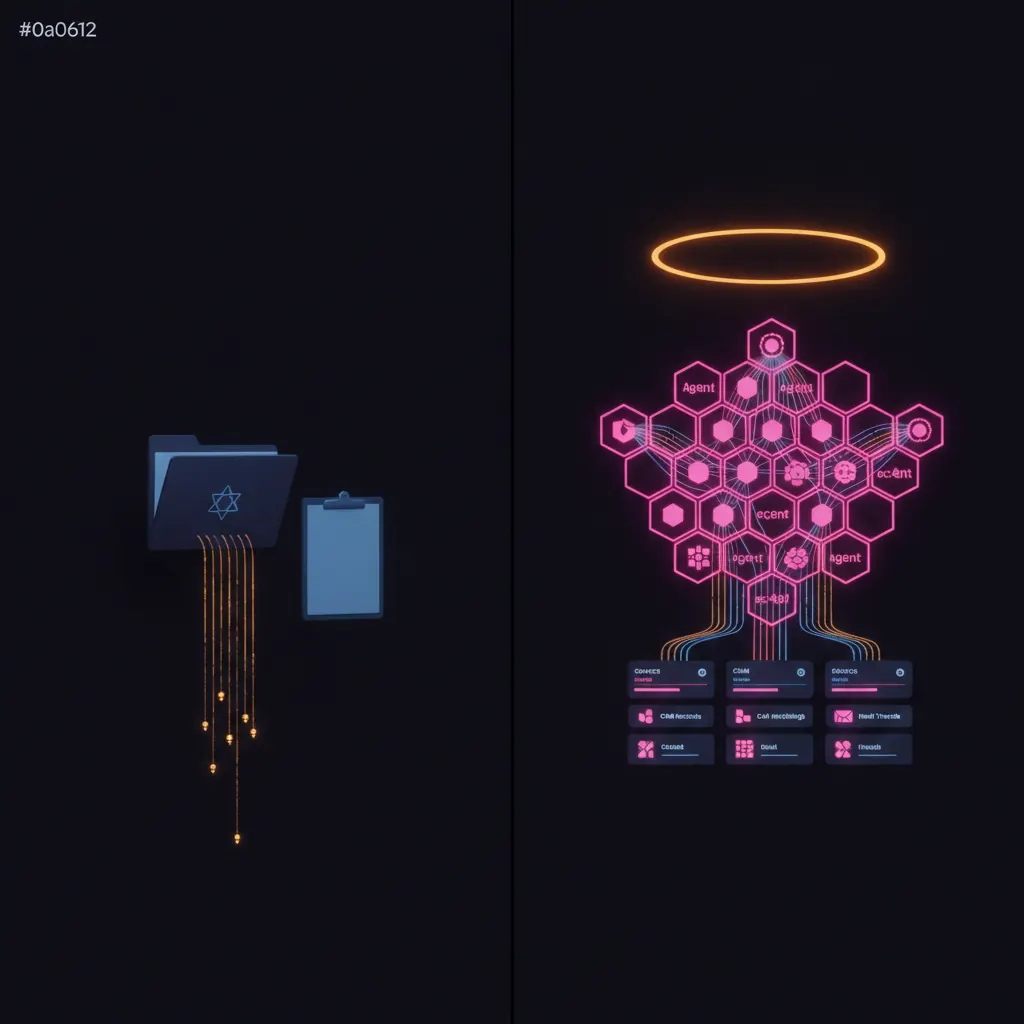
The retainer firm interviews six buyers and ships a deck. It does not read the CRM record, the call transcript, and the deal-room email thread against each other. It does not follow up with the 14 buyers who ghosted the retainer's outreach. It does not sit inside the pricing committee on Thursday and read the three losses that hit the same objection.
What a fractional AI win/loss function does
An agent stack runs the five parts on a cadence you did not have to prompt. On every Closed Lost stage change, the trigger agent reads the deal record, pulls the last 90 days of calls from Gong, pulls the email thread from the deal room, and pulls the internal Slack thread from the AE's opportunity channel. It writes a structured deal artifact into the win/loss workspace within 20 minutes of the stage change. The artifact links every source back to the opportunity ID.
Inside the 21-day window, the outreach agent drafts a buyer interview request in the AE's voice, times it to the buyer's LinkedIn activity, and offers three concrete windows against the buyer's calendar. Response rate on the outreach lands 22 to 34 percent when the request goes out inside 14 days of Closed Lost, against 6 to 9 percent for the retainer firm's cold outreach six weeks after the fact. The interviews that book run on a structured guide the agent adapts against the deal artifact. The transcript lands in the workspace with the deal record linked.
Every Monday, the synthesis agent reads the last 20 lost deals in one pass. It compares the objection pattern against the last two quarters. It tags the three patterns that show up in more than five deals. It drafts the read for the CRO, the VP Product, the CMO, and the pricing committee, each version framed against the decision that committee can make this week. The Head of RevOps reads the draft on Monday afternoon, ships it Tuesday morning, and closes the loop with the enablement, roadmap, and pricing owners inside the same week.
The unit economics of the trade
Path A keeps the outside retainer at $56K a year, keeps Gong at $145 a seat across 34 reps for $59K a year, keeps Clari at $85 a seat for $35K a year, and keeps the Head of RevOps running QBR slides on Friday. Six interviews a quarter inform two of the 47 losses. The pricing page, the SDR pitch, and the roadmap read the same in Q4 as they read in Q1. Pipeline burned on the same objection pattern lands $3.5M to $4.5M a quarter on the current conversion curve.
Path B keeps Gong for call recording and Clari for the forecast, kills the outside retainer, and runs a 14-day sprint to stand up the agent stack against the trigger, outreach, and synthesis parts. It runs at $3K to $6K a month on API spend and tooling plus a fractional research operator at $3K to $5K a month who owns the interview guide and the pattern review. Year one lands 22 to 34 percent buyer interview response, a synthesized read on 20 losses every Monday, and three concrete fixes shipped to enablement, pricing, and roadmap inside the first quarter. Pipeline recovered on the closed patterns lands $600K to $1.2M in the first two quarters against $84K ACV.
The three questions to run against every Closed Lost this quarter
Read the Closed Lost view before the next QBR. Every lost deal deserves three questions before the CRM reason sticks. The questions score whether the loss became a pattern the business acted on or a dropdown value nobody read again. Run them against the last 47 rows this week and a third of the queue reshapes the Q4 motion.
Which buyer conversation backs this loss reason? Name the interview date, the buyer role, and the transcript. If the answer is a dropdown selection the AE picked in a stage-change modal, the loss reason is a guess written in 14 seconds. Book the interview inside 21 days or read the deal artifact before the value sticks.
Which pattern does this loss share with the last 19 losses? Name the objection, the competitor, and the deal shape. If the answer is one line about a specific buyer, the read is anecdotal. Synthesis lives in the pass across 20 deals in one sitting, not in the stage-change note on the last one.
Which owner receives this read on Monday? Name the person in enablement, product, and pricing who acts on the pattern. If the read ships to a Google Drive folder and lives in a Friday QBR slide, no decision follows. Distribution is the function. A read no owner acts on is a research artifact, not a program.
If your CRO is reading 41 dropdown selections this quarter, the version where 20 losses ship a synthesized read every Monday is fourteen days away. Gong records. Clari forecasts. An agent stack runs the function. Scope a sprint and read the first pattern review land in the pricing committee inbox next week.
 2026-09-13
Your Event Booth Scanned 340 Badges and Sales Followed Up on 22
Your CMO opens the scan export Monday, 340 badges captured, 22 personal follow-ups sent, four warm demos booked. A queue nobody staffed.
 2026-09-11
Your Partner Pipeline Has 47 Registered Deals and the Channel Manager Called Nine
Your VP Sales opens the PRM Monday, 47 registered partner deals, nine partner-sourced meetings, four co-sell threads gone quiet. A queue nobody staffed.
 2026-09-09
Your Deal Desk Has 34 Open Quote Requests and the CRO Approves Discounts in Slack DMs
Your CRO opens the deal desk Monday, 34 open quote requests, 12 discount approvals in Slack, four quotes stuck six days. A queue nobody staffed.