Your Greenhouse Is Not Talent Acquisition
Greenhouse stores 4,200 applicants against 11 open reqs. Talent acquisition is the function that lands four right hires against the brief on cadence.

It is Monday, 9:04 AM. Your Head of People opens the weekly req brief and reads a tab from Greenhouse that stamped last Friday at 6:42 PM. 11 open reqs, 4,200 trailing-quarter applicants, 94 in active interview loops, and the Senior PM req on day 62 against a 42-day plan. Three hiring managers pinged in Slack over the weekend asking for the shortlist their recruiter promised on Thursday. The CEO asks on the exec sync at 10:00 AM for the ship date on the four Q1 hires the board signed in October.
The talent acquisition function was priced as the one that lands four right hires against the brief on cadence against the 11 open reqs. Three recruiters at $115K base, a Talent Lead at $160K, and the Head of People at $210K carry the function. The loaded year-one line reads $740K to $860K against Greenhouse at $34K and the sourcing stack at $48K. The function ships the Monday req brief on cadence one quarter out of four. The other three quarters, the brief lands Tuesday at 3:00 PM against the hiring manager Slack thread that forked twice over the weekend.
What Greenhouse stores and what the function ships
Greenhouse stores the 4,200 applicants. It stores the 94 active loops, the 240 scorecards, the 42 offer letters sent in the trailing quarter, and the 11 open reqs tagged against the department. It does not ship the Monday page the Head of People reads at 7:02 AM against the four Q1 hires.
The TA function was priced as five cuts a week. Monday req brief at 7:00 AM with the shortlist cited against the 11 reqs. Tuesday pipeline health cut against the 94 active loops with stall flags on the loops past day 21. Wednesday offer motion sync against the four reqs in the offer window with the comp band reconciled against Rippling. Thursday calibration brief against the scorecards the hiring managers signed. Friday sourcing cut against the 240 outbound-sourced candidates with the reply-rate cited against the rubric the Talent Lead signed.
The stack already paid to run the function reads Greenhouse, LinkedIn Recruiter, Gem, Calendly, and the Rippling comp band. Five systems, three recruiters, two leads, and a Monday brief that lands Tuesday at 3:00 PM against a Slack thread of version edits the Head of People reads twice before signing off on the shortlist.
What the stuck version costs the quarter
Pull the trailing four months of hiring cadence. Month one shipped two hires against the four-hire plan. The Senior PM req opened on day one and the first offer went out on day 54 against a 42-day plan. The AE req opened on day eight and the first offer went out on day 47. The two misses tagged against the sourcing gap the Talent Lead flagged in week two and the hiring manager calibration gap the Head of People flagged in week three.
Month two shipped one hire against a three-hire plan. The Staff Engineer req stalled on day 38 because the hiring manager wanted the shortlist re-run against a scorecard he rewrote on day 32. The recruiter re-ran the search against the new scorecard and shipped a shortlist on day 51 with four new candidates and six re-screened candidates. The CTO read the shortlist on day 54 and signed off on two for the onsite.
The CEO reads the trailing-four-months shortfall against the Q1 plan the board signed. Seven hires shipped against a 12-hire plan. The Series B board deck reads the hiring attainment at 58 percent on slide 14, and the Head of People reads the recruiter Slack thread against the Series C data room every time.
What the function synthesizes by hand
Loaded time on the five titles reads 54 hours a week on the synthesis work. 18 hours on the Monday req brief against the 11 reqs. 12 hours on the Tuesday pipeline health cut against the 94 active loops. 10 hours on the Wednesday offer motion sync against Rippling and the comp band. Eight hours on the Thursday calibration brief against the 240 scorecards. Six hours on the Friday sourcing cut against Gem and LinkedIn Recruiter.
None of the five systems ship the one Monday page. Greenhouse reads the raw applicants and the active loops. LinkedIn Recruiter reads the sourcing list against the Boolean search the recruiter saved in September. Gem reads the outbound reply rate against the 240 messaged candidates. Calendly reads the interview load against the 11 interviewers. Rippling reads the comp band against the 94 employees and the four offer letters in draft.
The gap is the synthesis against the firehose. The firehose runs five days a week against the five systems, and the TA function reads the firehose by hand against the brief the board signed.
What the agent reads on day one
A 14-day sprint stands up the fractional AI TA agent against the five systems. 4,200 trailing-quarter applicants tagged against the scorecard rubric the Talent Lead signed. 94 active loops scored against the stage-stall rubric and the day-in-stage rule. 240 outbound-sourced candidates scored against the Gem reply-rate rubric. 11 open reqs tagged against the department, the hiring manager, the comp band, and the day-in-req count against the plan.
Day seven, the first Monday req brief ships at 7:02 AM. 11 reqs with the shortlist cited on one line each. Three reqs flagged red for the day-in-req stall. Four reqs flagged amber for the hiring manager calibration ask. Four reqs on the clean path with the offer window open and the comp band reconciled against Rippling. The Head of People reads the brief on one page in 420 words and signs off on the four red and amber routing calls at 7:28 AM.
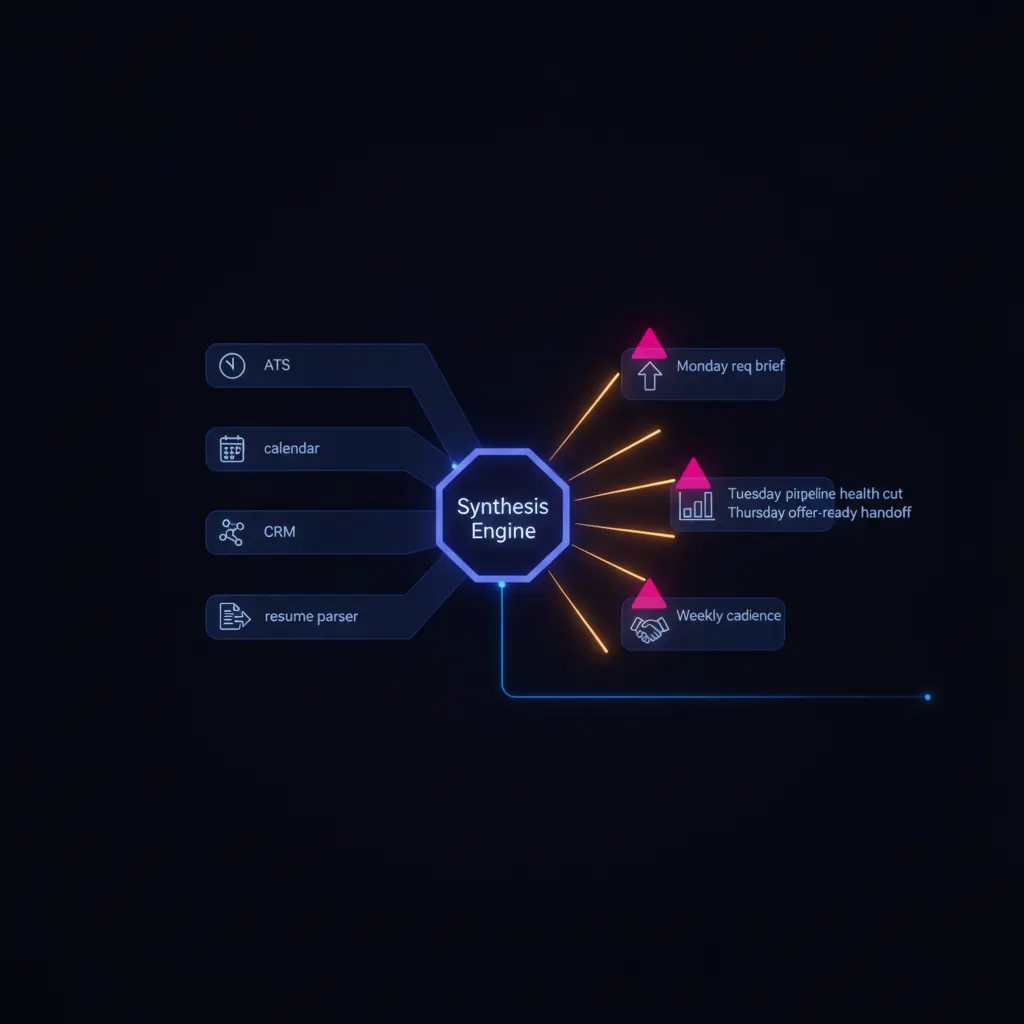
Day eight, the pipeline health cut ships at 7:02 AM against the 94 active loops. 11 loops flagged for the day-21 stall with the next-step cited against the recruiter owner. Four loops flagged for the scorecard miss the hiring manager signed in week two. The Wednesday offer motion sync ships against the four reqs in the offer window with the comp band and the counter-offer rubric cited against the three closed-lost offers in the trailing quarter.
Scorecard calibration. The agent reads the 240 scorecards on day one and flags the three scorecards with the signal-to-skill gap the Talent Lead signed on an escalation. The hiring manager keeps the scorecard signoff. The agent drafts the calibration brief and the recruiter runs the Thursday calibration call with the four hiring managers on the red and amber reqs.
Offer motion. The agent reads the comp band against Rippling and the three closed-lost offers against the counter-offer rubric. The Head of People signs every offer letter. The agent drafts the offer brief with the comp band, the counter-offer scenario, and the start-date window reconciled against the onboarding plan.
The unit economics against a fourth recruiter hire
The stuck version opens a fourth recruiter req at $115K base. Loaded year one lands $160K to $190K against the benefits, the ramp seat, and the recruiter fee at 22 percent on an external hire. Ramp runs one quarter on access reviews against the five systems and two quarters on the req familiarity against the 11 open reqs and the hiring manager calibration cadence.
The sprint reads $48K to $72K on the build depending on the scorecard depth and the Gem sourcing rules. Ongoing cost lands $3K to $5K a month on API spend, read access against the five systems, and the Head of People who signs the Monday brief. Year one lands $84K to $132K against the $160K to $190K loaded line on the fourth hire. The sprint ships the Monday req brief at 7:02 AM on day 15 of the engagement instead of month six of the ramp.
The three recruiters and the two leads keep every judgment call. The agent clears the 54-hour week of synthesis the function ran by hand against the five systems. The brief ships on cadence from week two. The hiring attainment reads one line against the Series C data room, and the Monday brief reads the four right hires against the plan the board signed.
What the Head of People reads on day 30
Day 30, the Head of People opens the Monday req brief at 7:02 AM against the 11 open reqs. Three red reqs with the stall flag routed to the recruiter owner. Four amber reqs with the hiring manager calibration booked for Thursday. Four reqs on the clean offer path with the comp band signed and the start-date window open. The Tuesday exec sync carries the hiring attainment line at 10:00 AM against the number the Monday brief stamped at 7:02 AM.
If your Monday req brief lands Tuesday at 3:00 PM against a Slack thread of version edits, the version where the brief ships at 7:02 AM against the five systems the office already paid to run is 14 days away. You can keep running the hiring cadence against the fourth recruiter hire that ramps for two quarters, or you can scope a sprint and read the Monday brief at 7:02 AM against the plan the board signed.
 2026-10-28
What a Fractional AI Legal Ops Agent Does
A fractional AI Legal Ops agent reads 240 live contracts, flags the 42 auto-renewing in 60 days, and ships the Thursday counsel brief by 8:00 AM.
 2026-10-25
What a Fractional AI Hiring Ops Agent Does
A fractional AI Hiring Ops agent reads 240 candidates across 11 reqs, drafts the Monday scorecard brief, and ships offer-ready handoffs by 8:00 AM.
 2026-10-09
Your Recruiting Pipeline Has 240 Candidates and Six Moved Stage Last Week
Head of Talent opens Greenhouse Monday, 240 candidates in-pipeline across 11 reqs, six moved stage last week, 94 sitting past 21 days. A function nobody staffed.