What a Fractional AI Finance Ops Agent Does
A fractional AI Finance Ops agent clears the 42 reconciling items, drafts the day-five flux brief, and ships a signed trial balance on day eight.
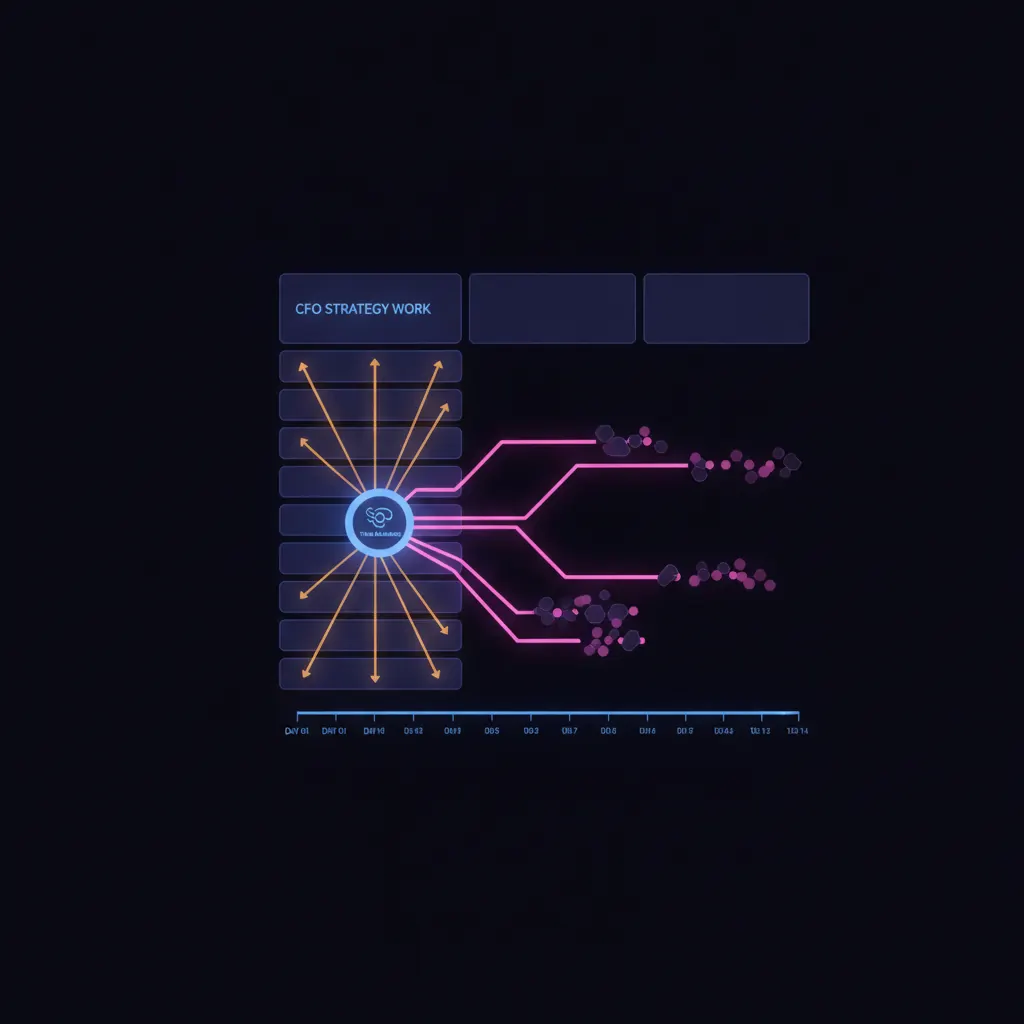
It is day five of the month-end close, 7:46 AM. Your Controller opens the agent inbox before the standup. A 360-word brief sits at the top of the queue. 42 reconciling items open across the general ledger and six subledgers, 11 flagged with a prior-period variance above the $25K materiality threshold, four intercompany mismatches cited by entity pair, the per-owner fix list routed to the six subledger leads, the flux commentary drafted against the two P&L lines moving more than 8 percent, and the day-eight signed trial balance timeline queued against the Audit Committee read on day fifteen. The 9:00 AM close standup opens with the fix list already assigned.
Three quarters ago, the same day-five read differently. The Senior Accountant pulled a trial balance into Excel at 7:46 AM, chased four subledger owners in Slack for the open AP batches, hand-keyed the intercompany adjustment on the $420K revenue tie-out, and walked into the 9:00 AM standup at 9:14 AM with a half-built flux commentary and no answer on the $180K variance sitting on the deferred revenue roll. Fourteen business days to the signed trial balance. Six people living in the master workbook. The agent compresses the fourteen to eight and clears the workbook down to one owner per lane.
What the function was supposed to own
A Finance Ops team sits at the junction of five systems. The ERP on the ledger side, the subledger stack on the AP, AR, payroll, revenue, and fixed-asset lanes, the FP&A model on the forecast side, the audit workpaper system on the control side, and the Slack channel where the exception traffic lives. The job description reads monthly close, flux commentary, intercompany reconciliation, audit readiness, and the quarterly Audit Committee read. The reality reads 60 hours a week on reconciliation chase during the close window, four hours a week on the flux commentary, and one Audit Committee call a quarter where the materiality questions get answered against the prior-period variance.
The close function is a queue with a cadence. 42 reconciling items, six subledgers, three entities, and six owners. The queue runs on a monthly rhythm because the Audit Committee reads a day-fifteen package and the FP&A model locks on day ten. The hygiene work sits between the Controller and the decision work, and the hygiene work eats the close.
What the agent runs against on day one
The agent reads against NetSuite or Sage Intacct for the general ledger, Bill.com or Tipalti for the AP batches, the AR aging report on the revenue side, Rippling or Gusto for payroll, the fixed-asset register for depreciation runs, and the audit workpaper tool for the control narrative. The read layer sits inside the systems the Finance Ops team already works in. The brief sits inside the Controller inbox the Controller already checks before coffee. No new tool goes on the stack.
Reconciling-item pass. The agent reads the 42 open items against the general ledger and six subledgers, cites the per-item owner against the last-logged activity, flags the 11 with a prior-period variance above the $25K materiality threshold, and routes the day-six fix ask to the six subledger leads. The 24-hour chase window the Senior Accountant used to burn on Slack pings drops to a 15-minute morning review of the exception list.
Intercompany reconciliation. The agent reads the eight entity pairs against the intercompany matrix, cites the four mismatches by entity pair and transaction type, drafts the per-pair journal entry against the parent reconciliation account, and routes the dual-sign ask to the two entity controllers. The $420K revenue tie-out that used to live in a Thursday-night Slack thread clears Wednesday morning with the entries queued.
Flux commentary draft. The agent reads the P&L against the prior-period baseline and the forecast variance, cites the two lines moving more than 8 percent, drafts the commentary against the operational driver cited by the business owner, and routes the FP&A review ask before the day-ten forecast lock. The Audit Committee reads a flux narrative with the operational cause cited per line instead of a variance-explanation placeholder.
What the agent ships on cadence
Day one, 8:00 AM. Close kickoff brief. Six subledgers staged, the carryover reconciling items from the prior period cited per owner, the two cutoff risks flagged against the AP batch and the revenue tie-out, the fix list routed to the six leads.
Day three, 8:00 AM. Subledger status brief. The AP close against the Bill.com batch, the AR aging against the collections variance, the payroll run against the Rippling tie-out, the fixed-asset register against the depreciation run, and the per-owner ask routed for the day-four review.
Day five, 8:00 AM. The reconciliation brief. 42 open items, 11 above the $25K threshold, four intercompany mismatches cited by entity pair, the per-owner fix list routed, the day-six target cited for the closure of the 11 material items. The Controller reads the brief at 8:08 AM and the 9:00 AM close standup opens with the fix list already assigned.

Day seven, 8:00 AM. Flux commentary draft. The P&L against the prior-period baseline, the two lines moving more than 8 percent cited against the operational driver, the FP&A model variance against the day-ten lock cited, the Controller ask routed before the review. The commentary that used to land day fourteen at 7:08 PM ships day seven at 8:00 AM with the business owner already quoted.
Day eight, 8:00 AM. Signed trial balance package. The ledger tied against the six subledgers, the intercompany pairs cleared, the audit workpaper references routed, and the Controller sign-off ask queued. The CFO reads the package on day eight instead of day fourteen. The Audit Committee read on day fifteen opens with seven days of float instead of one.
What the operator does with the hours back
The 180 to 220 hours a quarter the agent clears off the close land on four decisions. The deferred revenue policy against the ASC 606 contract-mod variance. The intercompany pricing framework against the transfer-pricing study. The audit-readiness narrative against the SOX control deficiency flagged in Q2. The quarterly earnings methodology against the forecast variance the CFO flagged in September. The function reads a day-five brief and ships four decisions by day ten. The queue runs on cadence.
The CFO stops asking the Controller for the number. The number is already in the brief. The Controller stops being the number person and starts being the policy person. One operator owns the day-five review per lane, the agent clears the queue, and the day-eight signed trial balance opens with the fix list cleared, the flux narrative queued, and the Audit Committee package drafted.
The unit economics on the function
A $220K to $260K Controller reads $290K to $350K loaded against the US entity. A $140K Senior Accountant reads $185K to $205K loaded. 60 hours a week during the close window at a loaded hour of $75 to $140 costs the function $90K to $170K a quarter in senior time on reconciliation hygiene, intercompany tie-outs, and the day-fourteen trial balance scramble. A 14-day sprint to stand up the Finance Ops agent runs in the low to mid five figures. Ongoing cost lands at $3K to $7K a month on API spend, ERP and subledger read access, and the Controller who owns the day-five review.
Pull the same math against a second Senior Accountant hire. The $140K base reads $185K to $205K loaded, 90-day ramp, 180-day replacement risk if the hire bounces. The sprint-versus-hire math lands two to five times cheaper on year one for the queue work. The Controller stays on the plan and lands on the policy work. The second accountant hire gets replaced with a sprint. The $200K line clears to the audit-readiness narrative above the queue.
What the sprint ships in 14 days
Day one, the agent reads against NetSuite or Sage Intacct, Bill.com or Tipalti, the AR aging feed, Rippling or Gusto, the fixed-asset register, and the audit workpaper tool. Day seven, the first reconciliation brief lands in the Controller inbox with the 42 open items routed to the six subledger leads. Day fourteen, the day-five brief lands at 8:00 AM with the 11 material items cited, the four intercompany mismatches cleared, and the flux commentary drafted. Day fifteen, the function sits on the same close cadence it will run every month for the next two years. One operator owns the day-five review per lane. The agent clears the queue.
If your day fourteen reads a scramble on the trial balance and the CFO is still asking which $180K variance to explain, the version where the brief lands at 8:00 AM on day five and the Controller owns the audit-readiness narrative is fourteen days away. NetSuite still stores the ledger, Bill.com still stores the AP batches, and the audit workpaper tool still stores the control narrative. The agent closes the queue the stack was already supposed to close. You can keep running the close on a six-person workbook, or you can scope a sprint and have the signed trial balance landing on day eight.
 2026-10-18
Your Jira Is Not Product Management
Jira stores 4,200 tickets. Product management is the function that keeps the 94 that move the roadmap closing on cadence with scope cuts on the ledger.
 2026-10-17
Your Zapier Is Not Automation
Zapier runs 420 Zaps. Automation is the function that keeps the 94 that move revenue firing on cadence with error routing and ROI on the ledger.
 2026-10-16
Your Notion Is Not Knowledge Management
Notion stores 1,840 pages. Knowledge management is the function that keeps the 94 pages your team reads this quarter accurate on cadence.