Your SDR Team Sent 47,000 Emails in Q3 and Booked 42 Meetings
Your VP Sales opens the outbound dashboard Monday, 47,000 sequences fired in Q3, 42 booked meetings on the calendar, 8 sourced opportunities. A queue nobody staffed.
It is Monday, 9:12 AM. Your VP Sales opens the Outreach dashboard with the first coffee. Q3 sequences fired reads 47,214. Positive replies reads 312. Booked meetings on the calendar reads 42. Sourced opportunities in Salesforce reads 8. Closed-won reads 1, at $34K ACV, from a founder who replied to a sequence the SDR forwarded from a template written in April.
She opens the SDR ledger. Six SDRs on the floor, three ramped past six months, one in week four of onboarding, two hired in July still working through the enablement doc. Loaded cost per SDR reads $118K a year with the comp plan, the seat, the tools, and the recruiter fee amortized. Six bodies against 42 meetings a quarter reads $16,900 per booked meeting and $85,000 per sourced opportunity, before the AE ever opens the intro call.
The founders in this seat keep opening a Senior SDR Manager req at $165K and wondering why the pipeline math still reads worse than the CAC on the last board deck. Outbound is not a headcount problem. Outbound is a nine-stage queue that starts with an ICP-fit account nobody enriched and ends with a booked meeting the AE keeps. Five tools touch the queue and none of them own it end to end.
The 340-account list nobody re-scored since June
Sort the outbound target list by the day the SDR added it. The active sequence audience reads 4,720 contacts across 1,340 accounts. Cross-reference the enrichment fields. 38 percent of the contacts carry a title the account stopped hiring for in 2024. 24 percent of the accounts sit inside industries the AEs closed zero deals in across the trailing four quarters. 187 of the accounts already sit in Salesforce with a closed-lost reason of "not our ICP" flagged by the AE inside the last 18 months.
The SDRs pulled the list in June from a ZoomInfo saved search the demand gen team built for a campaign that ended in April. Nobody re-scored the accounts against the last two quarters of closed-won data. Nobody suppressed the 187 already-lost accounts. Nobody checked the intent signals on G2, Bombora, or the website visitor logs before the sequence fired. The 47,000 emails landed in inboxes at accounts that would never close, and 312 humans replied to say some version of "wrong person, wrong company, wrong quarter."
The Series B version of this function re-scores every account on the list nightly against the closed-won pattern, the current AE book, the intent signal, and the last funding event. Suppresses any account with a closed-lost reason under 18 months old. Flags any account matching three or more ICP signals for the SDR to prioritize that day. The 1,340-account list collapses to 340 accounts the AEs would take a meeting on, and the reply rate stops reading like a spam benchmark. The routing runs every night against the trailing 90 days of AE feedback, not the June search that pulled the list in the first place.
The sequence library nobody rewrote since April
Open the Outreach sequence library. 34 active sequences. Median last-edited date reads April 14th. The top three by volume account for 71 percent of sends. Open rates read 22 to 28 percent, reply rates read 0.6 to 0.9 percent, positive reply rates read under 0.15 percent. The top sequence carries a subject line an SDR wrote in a Tuesday morning brainstorm and nobody A/B tested against a second variant in five months.
The founders reading the outbound dashboard keep asking the SDRs to "personalize more." The SDRs keep opening the account, spending 11 minutes on LinkedIn and the company blog, and typing a one-line reference to a funding round or a product launch into the top of the template. The AE ships the intro call and the prospect opens with "your email felt generic." The copilot seat the CRO bought in Q2 drafts a variant that reads the same as the last four variants because the model reads the template, not the account. The personalization budget lands in a template layer nobody rewrote against the closed-won voice pattern.
The Series B version reads the last 200 closed-won deals, extracts the language pattern the buyer used in the discovery notes, and drafts a sequence variant against every ICP segment the account list carries. Tests three variants against every segment in parallel, kills the bottom two after 400 sends, and promotes the winner into the library with the reply-rate delta attached. Reads the prospect's LinkedIn activity, the last three earnings calls if public, the last product launch, and the AE's account plan before drafting the opening line the SDR reviews and sends in 90 seconds. The library turns from a 34-sequence graveyard into a live testing surface that ships a new winning variant into rotation every ten days.
The intent signals nobody wired into the sequence trigger
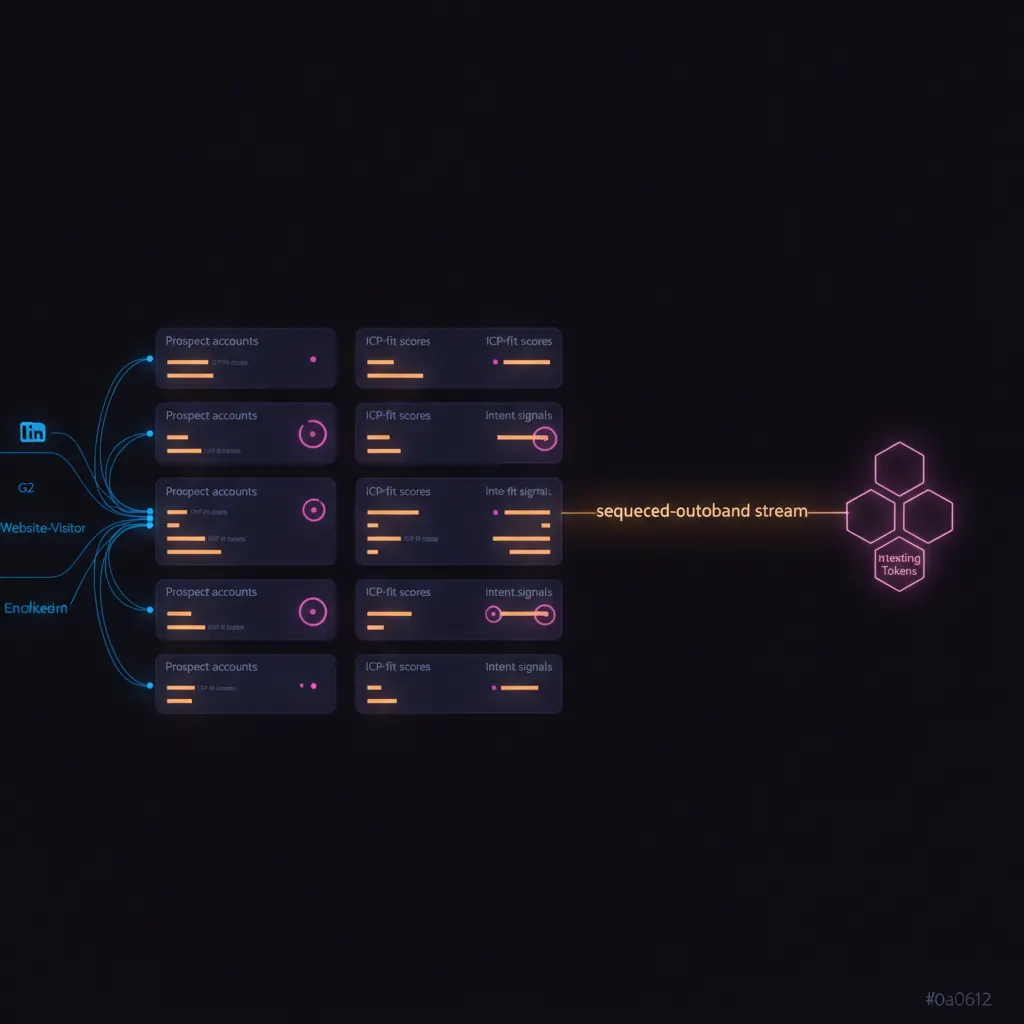
The marketing stack fires signals every day the SDR never reads. The G2 intent feed logs 47 accounts researching your category in the trailing 30 days. The website visitor tool logs 340 anonymous sessions from target-account IP ranges. The content team reads a 22 percent open rate on the last nurture email to the ICP list. The product-led signup form ships 84 free-tier accounts a month from companies over 200 employees. The case-study page logs 190 unique account visits a week from logos the AE would take a meeting on.
None of the five signals fire an outbound sequence against the account inside the hour. The SDR opens the account Friday afternoon when the Salesforce dashboard bubbles the intent score up the queue, and by then the buying committee already moved to a competitor demo. The stuck version of this function ships 47,000 blind sequences a quarter and misses 60 percent of the accounts already showing hand-raise behavior. The intent stack costs $8K a month and feeds a dashboard the SDR reads once a week when the manager pulls it into the Monday call.
The Series B version wires every intent signal into a routing layer that triggers an SDR sequence inside 30 minutes of the signal firing. G2 category research on a target-book account routes an ICP-scored sequence with the category comparison in the opening line. Website visitor tool identifies a target account viewing the pricing page twice in a week and the SDR gets a Slack ping with the draft opener already written. Product-led signup from a 300-person company triggers an enablement-and-expansion sequence the same day. The 42 booked meetings a quarter moves to 140 against the same six SDRs because the sequences fire against accounts already reaching for the door.
The unit economics of a Senior SDR Manager against an agent stack
Run the two paths against the Senior SDR Manager req sitting in the drafts folder at $165K base plus 25 percent variable and equity refresh. Path A closes the req in October, ramps the manager through Q1, and adds a seventh SDR body against the same 1,340-account list. Loaded year-one cost lands $228K to $272K for the manager and another $118K for the SDR seat. Total incremental $346K to $390K. Booked meetings move from 42 to 58 a quarter because the manager tightens the daily activity metrics and the seventh SDR ramps to 60 percent by Q2. Sourced opportunities move from 8 to 12. CAC per opportunity reads $65,000, down from $85,000, still worse than the paid channel.
Path B ships a three-sprint fractional AI SDR function at $84K to $126K in build across the first 60 days and $6K to $9K a month to run. Sprint one lands the account re-scoring and suppression layer against the CRM history, the closed-lost log, and the current AE book. Sprint two lands the sequence generation and variant testing engine against the last 200 closed-won deals and the ICP segments. Sprint three lands the intent-signal routing layer against G2, the website visitor tool, the product-led signup form, and the content nurture stream.
The fractional AI department runs the outbound queue on the cadence the intent signals fire, not the cadence a manager can push in a daily standup. Loaded year one lands $156K to $234K plus a fractional Head of Sales Development at $7K a month who owns the sequence judgment, the AE feedback loop, and the exception review. Total $240K to $318K against a $346K to $390K path A. Booked meetings move from 42 to 140 a quarter against the same six SDR seats because the sequences target the 340 accounts already showing intent, not the 1,340 accounts the June ZoomInfo search bundled together. Sourced opportunities move from 8 to 34. CAC per opportunity collapses from $85,000 to $9,400, and the AE stops opening the intro call with a prospect who forgot filling in the form. The 14-day sprint that stands up the account re-scoring layer costs less than the recruiter contingency fee on the SDR Manager search.
The four numbers a VP Sales runs before the next SDR req
The founders reading this are two weeks from posting an SDR Manager req on the strength of a "we need to scale outbound" narrative. Before the offer letter goes out, run four numbers against the outbound function, not the headcount. Score the queue, not the hire.
Sequenced-account waste rate. Divide the accounts on the active outbound list that carry a closed-lost reason under 18 months old, sit outside the current ICP segments, or match zero intent signals by total accounts on the list. A healthy function runs under 12 percent. A stuck function runs 45 to 60 percent, and the 47,000-email quarter targets a list nobody re-scored since April.
Intent-signal response time. Measure the median hours from an intent signal firing on G2, the website visitor tool, the content nurture stream, or the product-led signup form to a matched outbound sequence landing in the inbox. A healthy function runs under 2 hours. A stuck function runs 96 to 240 hours, and the buying committee already booked a competitor demo.
Positive-reply rate. Divide the replies that route to a booked meeting or a nurture-later flag by total sends in the trailing 30 days. A healthy function runs above 1.4 percent. A stuck function runs under 0.2 percent, and the reply inbox reads like a spam-filter report.
CAC per sourced opportunity. Divide the loaded outbound spend on comp, tools, and enablement over the trailing 90 days by sourced opportunities the AE accepted. A healthy function runs under $12,000. A stuck function runs $65,000 to $110,000, and the CFO opens the board pack asking why outbound stays on the map. Any two numbers in the stuck zone means the queue is the problem, and you can scope the SDR function in a 30-minute call this week.
 2026-10-17
Verticalized Directory Platforms: Why Niche Beats Horizontal in 2026
Niche directories are beating Yelp and Google Maps on trust, cost-per-lead, and topical authority. The product-strategy case for vertical over horizontal in 2026.
- 2026-10-05
How Mai Influence Leverages AI in the Creator Marketplace in 2026
Mai Influence runs an AI-curated Bangkok creator marketplace with payment reliability as the moat. Here is how AI replaces agency middlemen in the creator economy.
 2026-10-04
Your New Sales Rep Takes 7 Months to Ramp and 42% Miss First Full Quota
VP Sales opens the ramp tracker Monday, 14 AEs hired this year, 7-month average ramp, 42% miss first full-quarter quota. A function nobody staffed.