Your HubSpot Is Not Marketing Operations
HubSpot stores 1,840 leads against 42 workflows and 11 campaigns. Marketing operations is the function that lands the Monday pipeline-contribution brief at 7:02 AM.

It is Monday, 10:42 AM. Your Head of Marketing opens the pipeline review and reads the line that HubSpot stores 1,840 open leads against 42 live workflows and 11 campaigns in flight. 240 of those leads landed in the last 14 days against four paid channels and three content tracks. The CMO asks one question. Which of the 240 reads against the three ICP cuts the CRO signed at the Q3 pipeline summit.
The pipeline-contribution brief lands Thursday afternoon. The Head of Marketing writes it by hand against the HubSpot workflow export the ops analyst pulls on Monday morning. The brief ships to the CRO sync two days late against the two routing decisions the AE leads need to close the Q1 territory plan.
What the stack stores vs what the function ships
HubSpot already stores the 1,840 open leads, the 42 live workflows, the 11 in-flight campaigns, and the 94 lifecycle-stage tags against the ICP rubric. Salesforce carries the 240 opportunities against the 11 AE books and the three product lines. 6sense scores the 1,240 target accounts against the intent surge read on the last 30 days. Marketo runs the 18 drip programs against the 420 nurture segments the demand-gen lead stamped in September. Google Analytics reads the 94 landing pages against the four paid-channel UTM tags.
The five systems ship the firehose. None of the five ship the one Monday pipeline-contribution brief against the three ICP cuts and the 11 live campaigns. The Head of Marketing writes the brief by hand on Friday night against the HubSpot workflow report, the 6sense intent tag, and the Salesforce stage read the ops analyst flagged on Monday morning.
Marketing operations was scoped as four cuts a week when the CMO opened the function against the Series B close. The req stayed open through Q3. The Head of Marketing runs the stack by hand on Fridays after the demand-gen sync, and the two stuck routing calls in October shipped 420 MQLs to the SDR queue against accounts the CRO flagged as non-ICP at the summit.
What the drift costs on the P&L
Pull the trailing three quarters. Q2 shipped $320K of paid spend against four channels with 1,240 MQLs routed to the SDR queue. 840 of the 1,240 landed outside the three ICP cuts the CRO signed in January. 42 of those 840 closed to opportunity against a $4,200 average blended CAC. $176K of paid spend reads against leads the CRO signed as non-commit before the quarter opened, and the SDR team ran 420 dials against the same list on the Q2 cadence.
Q3 shipped the same shape against the content track. 240 hand-raisers landed on the pricing page against the three paid-social cohorts the demand-gen lead opened in July. 180 of the 240 routed to the lifecycle nurture tag against the Series A segmentation the Head of Marketing signed in 2024. The segmentation never reconciled against the Series B ICP. 42 enterprise hand-raisers sat in the Marketo drip for 28 days against a workflow the ops analyst flagged on the audit in August.
The CFO reads the trailing eight quarters against the Series C data room the board signed in October. $420K to $640K of paid-spend misroute across 24 months against leads that shipped on the HubSpot workflow and reconciled against zero of the three ICP cuts the CRO signed at the summit. The number carries into the diligence conversation on day 180 of the raise.
What the Head of Marketing synthesizes by hand
Loaded time on the Head of Marketing and the two ops analysts reads 36 hours a week on the synthesis work. 12 hours on the Monday pipeline-contribution brief against the 1,840 open leads. 10 hours on the Tuesday MQL-to-SQL cut against the 42 live workflows. Eight hours on the Thursday channel-spend cut against the four paid-channel UTM reads. Four hours on the Friday nurture cut against the 420 Marketo segments. Two hours on the Monday CRO-facing routing note the CMO signs before the exec sync.
None of the five systems ship the one Monday page. HubSpot reads the workflows. Salesforce reads the stages. 6sense reads the intent. Marketo reads the drips. Google Analytics reads the UTM. The synthesis against the firehose runs five days a week against the five systems, and marketing operations reads the firehose by hand against the ICP cut the CRO signed in January.
The 9-hour Head of Marketing day carries the same shape across six systems stitched by hand against the stack the office already paid to run. Marketing operations is the function that buys back 36 hours a week on the three titles and kills the $176K of Q2 paid-spend misroute in the first quarter of the engagement. The CFO reads the ledger line against the burn and signs the sprint before the Q4 close call.
What the agent reads on day one
A 14-day sprint stands up the fractional AI marketing operations agent against the five systems. 1,840 open leads tagged against the three ICP cuts, the 6sense intent band, and the 11 in-flight campaigns. 240 opportunities linked against the lead source and the Salesforce stage. 1,240 target accounts scored against the 6sense surge read and the Marketo segment tag. 42 workflows read against the lifecycle stage and the paid-channel UTM the Google Analytics report stamped on Friday.
Day seven, the first Monday pipeline-contribution brief ships at 7:02 AM. Three ICP cuts cited against the current-week MQL count and the paid-spend line on one page. 11 off-ICP campaigns flagged for the pause call with the channel-spend read against the blended CAC. The Head of Marketing reads the brief on one page in 480 words and signs the 11 pause calls at 7:24 AM.
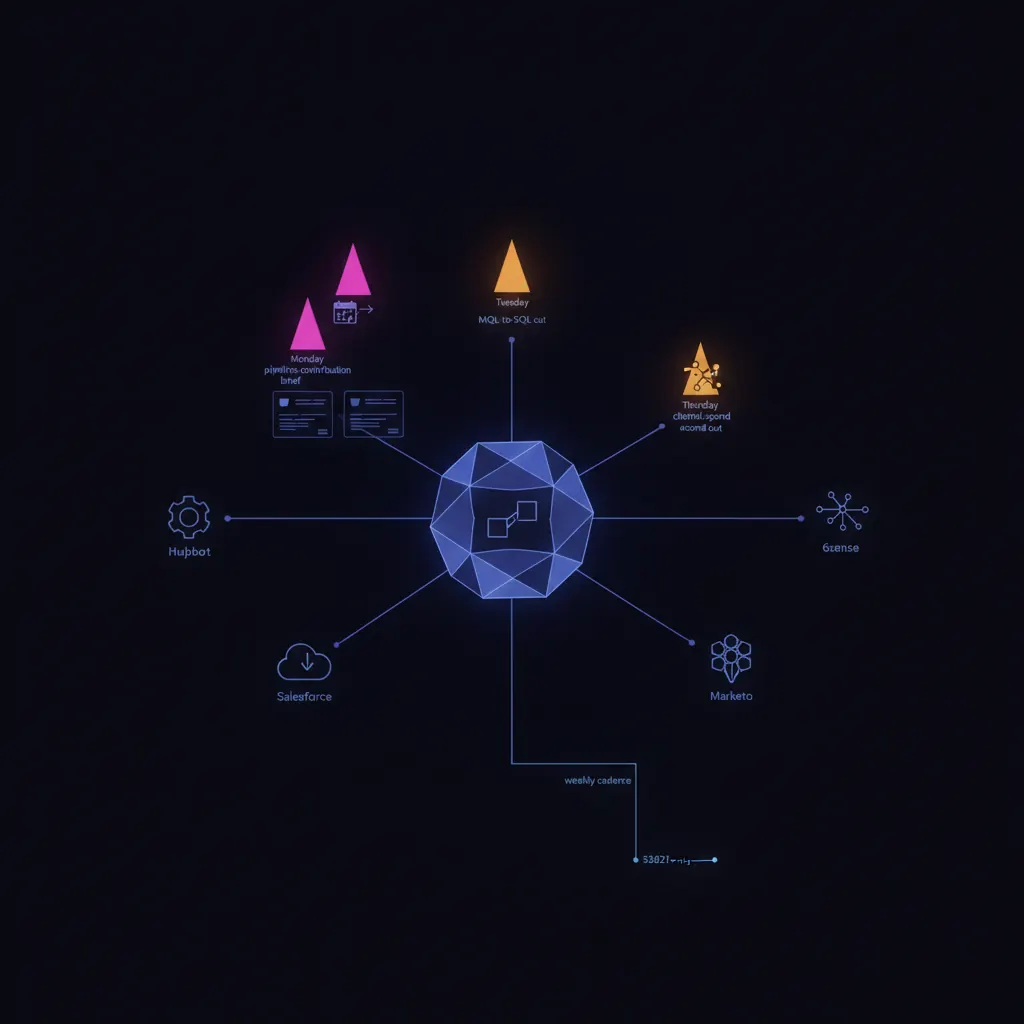
Day eight, the Tuesday MQL-to-SQL cut ships at 7:02 AM against the 42 live workflows. Seven workflows flagged for the stage-conversion gap against the Salesforce read on the last 30 days. Four workflows flagged for the lifecycle-tag drift the ops analyst stamped at the September audit. The Thursday channel-spend cut ships against the four paid channels with the three CAC collisions routed to the demand-gen lead before the Friday budget lock.
ICP routing. The agent reads the 1,840 open leads on day one against the three ICP cuts the CRO signed. 420 leads land on the mid-market cut against the ACV band. 640 leads land on the enterprise cut against the account-tier tag. 380 leads land on the expansion cut against the Salesforce customer flag. 400 leads land outside the three cuts. The Head of Marketing reads the 400 off-ICP leads and signs the suppression call against the paid-spend cost on one page.
Intent surge routing. The agent reads the 1,240 target accounts on Tuesday against the 6sense surge read and the Marketo segment tag. 42 accounts route to the AE book with the surge band, the account owner, and the paid-channel UTM cited on one line. The Head of Marketing keeps the judgment call on every campaign pause, and the agent clears the 10-hour cut the ops analysts ran by hand against the 42 live workflows.
The unit economics against a third ops analyst hire
The stuck version opens a third marketing ops analyst req at $110K base. Loaded year one lands $160K to $190K against the OTE, the Carta grant, and the ramp seat. Ramp runs one quarter on tool access against the five systems and two quarters on segmentation familiarity against the 420 Marketo segments and the 42 HubSpot workflows.
The sprint reads $44K to $62K on the build depending on workflow depth and the ICP rubric. Ongoing cost lands $3K to $5K a month on API spend, read access against the five systems, and the Head of Marketing who signs the Monday brief at 7:02 AM. Year one lands $80K to $122K against the $160K to $190K loaded line on the third hire. The fractional sprint ships the Monday pipeline-contribution brief at 7:02 AM on day 15 of the engagement against month six of the ramp on the hire.
The payback reads cleaner against the paid-spend line. $176K of Q2 paid-spend misroute closed in the first quarter reads three quarters of the sprint build at the top of the range. $120K of lifecycle-nurture drift closed in Q3 reads the full first-year ongoing against the Thursday channel-spend cut. The two lines close inside the first quarter of the engagement before the Monday pipeline-contribution brief ships into its second cycle.
What the CMO reads on day 30
Day 30, the CMO opens the Monday pipeline-contribution brief at 7:02 AM against the 1,840 open leads. 400 off-ICP leads suppressed against the paid-channel UTM with the pause note cited on the HubSpot campaign. 42 surge accounts routed to the AE book against the 6sense read. The Tuesday exec sync carries the three-cut line at 10:00 AM against the number the Monday brief stamped at 7:02 AM.
If your Monday pipeline-contribution brief lands Thursday afternoon against an inbox the Head of Marketing reads twice, the version where the brief ships at 7:02 AM against the five systems the office already paid to run is 14 days away. You can keep running the HubSpot workflow report against the third ops analyst that ramps for two quarters, or you can scope a sprint and read the Monday brief at 7:02 AM against the three ICP cuts the CRO signed at the summit.
 2026-11-12
What a Fractional AI FP&A Agent Does
A fractional AI FP&A agent reconciles 42 GL accounts, drafts the Monday cash brief, and ships the three-scenario forecast on day eight of close.
 2026-11-10
Your Slack Is Not Internal Communications
Slack posts 42,000 messages a week across 240 channels. Internal communications is the function that lands 94 employees on the two signals that move the quarter.
 2026-11-04
Your Stripe Is Not Finance Operations
Stripe processes 42,000 payments a quarter. Finance operations is the function that closes the month on day eight with the CFO brief signed.