Your Reference Program Has 47 Willing Logos and Sales Cites Six on Late-Stage Calls
Your CRO opens the reference tracker Monday, 47 reference-willing customers on the sheet, six named on late-stage calls, four calls slipping. A queue nobody staffed.

It is Monday, 9:34 AM. Your CRO opens the customer reference tracker the CS team keeps in the shared drive. 47 customers flagged reference-willing after the last NPS wave. She scrolls to the AE cite log. Trailing 60 days, late-stage opportunities where the AE requested a reference: 34. Late-stage opportunities where an AE landed a live reference call inside 72 hours: 11. Late-stage opportunities where the AE cited the same three logos on the deck: 28.
She opens the deal-slip log. Q3 pushed 14 late-stage opportunities into Q4 with a reason flagged in Salesforce. Four carry the reason "prospect wanted a peer reference we could not stage." One of those four was a $480K ACV account the AE worked for seven months. The reference that would have closed the deal sat on the sheet as a willing logo with a matching industry, a matching use case, and a champion who took a discovery call from the AE eight weeks earlier. Nobody staged the call.
The founders in this seat keep asking the VP CS to "stand up a proper reference program" and wondering why the AEs cite the same six logos every quarter. Customer references is not a spreadsheet. Customer references is a seven-stage queue that starts with a happy customer signal firing on an NPS survey and ends with a peer reference call the AE lands 48 hours after the prospect asks. Four surfaces feed the queue and none of them own it end to end.
The 47 willing logos and the 6 the AE keeps calling
Sort the reference tracker by the last time an AE asked the customer to take a call. Six logos carry a request inside the last 90 days. Nineteen carry a request inside the last 12 months. Twenty-two carry zero requests since the customer signed up. The twenty-two logos include the two logos in the segment the AE is losing the most deals in this quarter, the three logos in the industry the CMO built the last ABM campaign around, and the four logos running the exact use case the mid-market deals keep asking about on the second call.
The reason the AE calls the same six logos is not laziness. The AE opens Salesforce, reads the account plan, opens the reference sheet in a second tab, filters for industry, filters for use case, filters for size band, lands on a shortlist of three, checks Slack to see who the CSM is, pings the CSM, and waits four days for a reply because the CSM is running a QBR against a churn account. The AE gives up on Wednesday, opens the deck, and drops the same three logos on slide 14 the AEs have been dropping since Q1. The reference layer collapses into a memory game the tenured AE wins and the ramping AE loses on every deal above $250K.
The Series B version of this function scores every reference-willing customer nightly against the open pipeline. A late-stage opportunity in fintech at 800 employees running the compliance use case fires a match against the two willing fintech customers, the four willing compliance-use-case customers, and the three willing 500-to-1200-employee customers, cross-references the CSM's calendar for reference-request capacity that week, and drafts a warm-intro email in the AE's voice inside the hour. The scoring layer treats reference-request fatigue as a hard input, capping any single customer at two live calls a quarter and rotating the shortlist across the segment so the same three logos stop absorbing every ask. The 47-logo sheet stops being a filter surface and starts being a live routing layer the ramping AE opens on day 22.
The five signals firing every week nobody wires into the tracker
The customer surface fires signals every week the reference tracker never reads. The Q2 NPS wave landed 84 new 9-and-10 responses from customers currently paying. The community Slack posts 47 unprompted product-love threads in a trailing 30-day window. The support ticketing tool logs 22 tickets closed with a five-star customer rating and a public thank-you note. The CS team runs 34 QBRs a quarter and takes notes on wins the customer walks through in the deck. Twelve of those wins carry a measurable outcome the prospect on the mid-market deal would kill to hear.
None of the five signals promote the customer into the reference tracker inside the week. The Head of Customer Marketing owns the tracker, owns the case-study pipeline, owns the customer advisory board, and owns the annual conference program. The tracker gets a manual refresh once a quarter after the NPS wave. The Slack threads never route anywhere. The QBR notes sit in a Notion page four folders deep the AE never opens. The stuck version of this function ships a 47-logo sheet built off a survey the customer answered nine months ago and misses the twelve customers who mentioned a specific quantified outcome in a QBR last month.
The Series B version wires every signal into a reference-tracker update loop that fires inside 24 hours of the signal landing. An NPS 10 with a written comment routes an opt-in request to the customer that day with a two-question intake tied to industry and use case. A community Slack thread with a positive product mention flags the account for a reference-opt-in ping the CSM reviews in the Monday queue. A QBR note with a quantified outcome fires a metrics-capture task the CSM approves in ninety seconds. The tracker turns from a 47-logo static sheet into a 190-logo live surface with fresh outcomes attached inside two quarters.
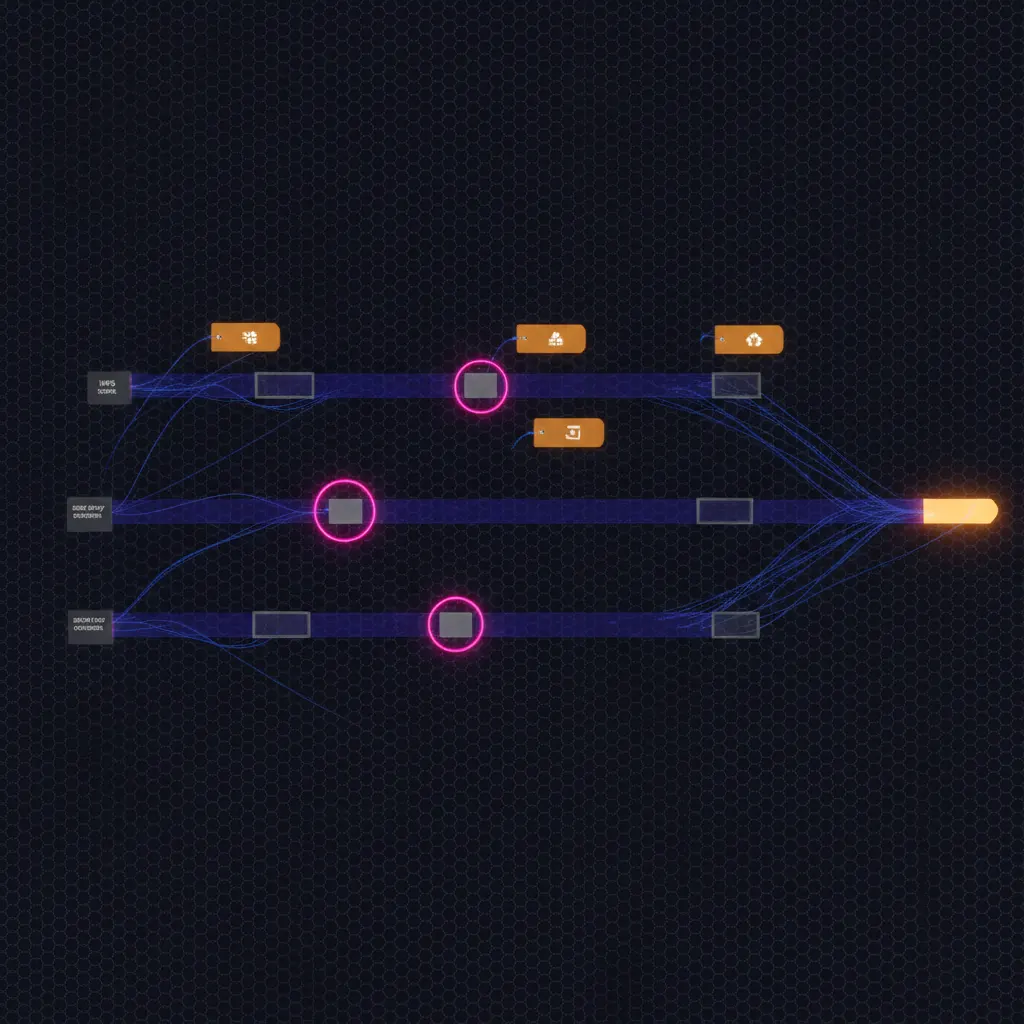
The 72-hour window that decides late-stage deals
The prospect asks for a reference on Thursday of the second call. The AE has 72 hours before the buying committee meets internally on Monday to sequence a peer call, land a written quote, or ship a case-study link that matches the exact industry and use case the prospect asked about. The stuck version of this function drops the request into a Slack channel called ref-requests, waits two days for the CS ops person to reply, and lands a matched customer on the calendar the following Tuesday. The prospect has already reached the internal committee with three references from the competitor and one hedged "we are still waiting on a call from their side." The deal moves to closed-lost with a reason that reads "went with Competitor B on stronger customer proof."
The 72-hour window is where the win-rate delta against named competitors collapses. The AE loses on trust, not on product. The PMM shipped a case study for the exact use case in June. The CSM has a customer on the roster who spoke on a webinar in August about the same problem. Neither of the two assets lands in the AE's inbox inside 72 hours because no function owns the routing, and the assets sit in three different repositories with three different owners nobody paged on a Thursday afternoon.
The Series B version fires an intake bot the moment the AE flags a reference request on the opportunity. The bot reads the account plan, the industry, the size band, the use case, and the buying committee titles, matches against the live reference tracker, checks the CSM's calendar for a reference-request capacity slot inside 72 hours, drafts a warm-intro email in the AE's voice, drafts the reference customer's talking points sourced from the last QBR notes and the last NPS comment, and drops a Slack card into the AE's channel with three logos, three drafted intros, and a one-click confirm button. The reference lands on the calendar Friday afternoon. The buying committee reads the peer quote Monday morning.
The unit economics of a Customer Reference Manager against an agent stack
Run the two paths against the Customer Reference Manager req sitting in the drafts folder at $135K base plus 15 percent variable and equity refresh. Path A closes the req in October, ramps the manager through Q1, and adds one body to the CS team already carrying QBRs, expansion, and churn recovery. Loaded year-one cost lands $188K to $224K for the manager. Reference-tracker size moves from 47 to 84. AE reference-request fulfillment inside 72 hours moves from 32 percent to 51 percent. Late-stage slip rate on reference-triggered deals moves from 12 percent to 9. Sourced revenue lift reads two additional closed-won deals a quarter at $420K.
Path B ships a two-sprint fractional AI customer reference function at $52K to $78K in build across the first 30 days and $4K to $6K a month to run. Sprint one lands the reference-tracker scoring and signal-capture layer against NPS, community Slack, support tickets, QBR notes, and the case-study repository. Sprint two lands the 72-hour intake and routing loop against the Salesforce opportunity feed, the CSM calendar layer, and the AE Slack channel. The whole build fits inside one 14-day sprint window on the calendar the CS team already blocks for the quarterly planning offsite.
The fractional AI department runs the reference queue on the cadence the AE requests fire, not the cadence a CS ops manager can push in a weekly standup. Loaded year one lands $100K to $150K plus a fractional Head of Customer Marketing at $5K a month who owns the customer relationship judgment, the escalation calls, and the exception review. Total $160K to $210K against a $188K to $224K path A. Reference-tracker size moves from 47 to 190. AE reference-request fulfillment inside 72 hours moves from 32 percent to 84. Late-stage slip rate on reference-triggered deals moves from 12 percent to 3. Sourced revenue lift reads seven additional closed-won deals a quarter at $1.9M against the same AE headcount. The 14-day sprint that stands up the signal-capture layer costs less than the annual customer advisory board offsite the CMO booked in July.
The four numbers a CRO runs before the next reference manager req
The founders reading this are three weeks from posting a Customer Reference Manager req on the strength of a "we need to stand up references" narrative. Before the offer letter goes out, run four numbers against the reference function, not the headcount. Score the queue, not the hire.
Reference-tracker freshness ratio. Divide the reference-willing customers with a re-opt-in inside the trailing 12 months by total willing customers on the sheet. A healthy function runs above 75 percent. A stuck function runs 25 to 40 percent, and the sheet carries logos from customers who churned six months ago the AE never noticed.
Signal capture rate. Divide the customer wins captured into the tracker from NPS surveys, community threads, support tickets, and QBR notes across the trailing 90 days by total qualifying signals fired. A healthy function runs above 60 percent. A stuck function runs under 15 percent, and the QBR win the CSM celebrated in the deck never routes into a peer-quote asset the AE reads on Friday.
72-hour fulfillment rate. Divide the reference requests fulfilled with a matched live call or a matched case-study asset inside 72 hours by total AE reference requests in the trailing 60 days. A healthy function runs above 80 percent. A stuck function runs 20 to 35 percent, and the buying committee reads a competitor peer quote before your CSM replies in Slack.
Late-stage slip on reference-triggered deals. Compare the slip rate on late-stage opportunities where the AE flagged a reference request against the slip rate on late-stage opportunities with no reference request. A healthy function runs within 3 points. A stuck function runs 12 to 20 points wider, and the CFO opens the board pack asking why the top-decile deals keep pushing a quarter. Any two numbers in the stuck zone means the queue is the problem, not the headcount, and scope the reference function in a 30-minute call this week.
 2026-10-17
Verticalized Directory Platforms: Why Niche Beats Horizontal in 2026
Niche directories are beating Yelp and Google Maps on trust, cost-per-lead, and topical authority. The product-strategy case for vertical over horizontal in 2026.
 2026-10-14
Your CRM Is Not Pipeline
A CRM stores deal records. Pipeline is the function that moves 94 open opportunities through stage on cadence. The gap is operating shape, not CRM quality.
- 2026-10-05
How Mai Influence Leverages AI in the Creator Marketplace in 2026
Mai Influence runs an AI-curated Bangkok creator marketplace with payment reliability as the moat. Here is how AI replaces agency middlemen in the creator economy.